About
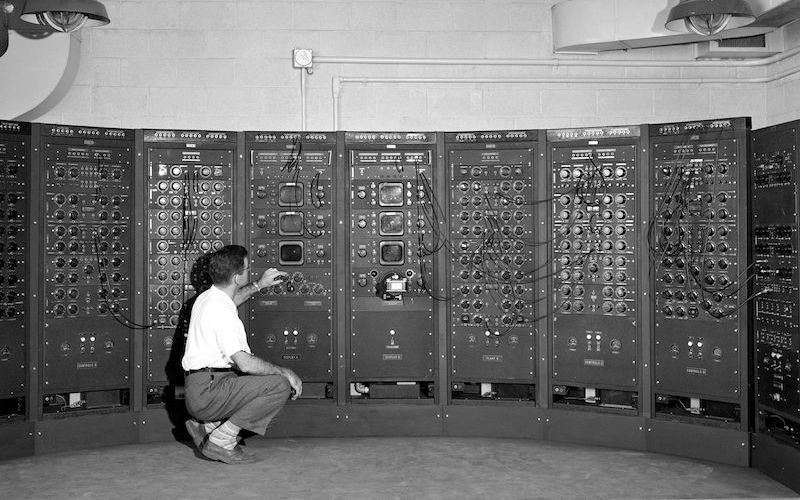
In HIS 3630, Teaching History with New Media, we will analyze how the “digital shift” of the last three decades has raised interesting possibilities (and questions!) about how we research, write, learn, and teach about history using new technologies.
This semester, our main task is to conduct research-based projects that harness the potential of digital tools to teach history. Whether your career path involves public or private education, curriculum development, museum studies, government or NGO work, or more … the same questions arise: “How do audiences engage with the past online?”, and “How can instructors/presenters promote historical inquiry through digital tools and new media?”
By the end of this semester, you will feel better prepared to teach others about the past in this increasingly digitized world.
Course Objectives
Primary Objective
To explore the intersection of technology, history, and the public
Other Objectives
- To evaluate the ways in which digital tools can re-imagine the teaching and learning of history
- To identify technology for best engaging audiences (students/web users/general public)
- To develop your own “digital” identity
Being Successful in HIS 3630
Communicate—Establishing regular and effective communication with both your instructor and your classmates is important in a course that depends on collaboration, engagement with technology, and project-based learning.
Classroom—Bring your computing device each session, and make sure your desktop/browsers/screen are OK to display. An Active Learning Classroom (ALC) works best when students share their work with classmates on the TV monitors, use the glass board to sketch out ideas, and move around the room to touch base with other groups. Use the hooks on the wall to hang your coats/backpacks to clear up floor space for extra mobility.
Campus – Use the various campus & online resources for writing, researching, and citing (and projects). Make use of drop-in hours to share ideas, get help, or get clarification. Schedule via zoom if needed.
Structure Your Time— Set aside specific time for course readings and classwork. Consider that time as “in-class.” Type or write down notes as you go through the weekly readings. [For a primer on reading like a historian, and not wasting too much time completing reading assignments, see “How to Read a Book in One Hour” by Larry Cebula]
- Whenever you work with technology and new media, it is very easy to get sucked into hours of tech work (and tech frustration). Reach out to the instructor as soon as needed.
Be Kind to Yourself—Take care of your emotional, physical, and mental health. Reach out if you begin to feel overwhelmed. Get sleep, exercise, eat well, and be patient with yourself. HIS 3630 is a collaborative space—we’ll lean on each other throughout the semester.
Course policies
Attendance: Because this is a course that involves active participation, both in class and online, attendance and participation is vital to your success. Life happens, though. Although attending every class is ideal, unexpected events occur in any given semester. As such, five (5) absences is acceptable and does not require explanation … just send the instructor a courtesy email.
- HEP policy: Because we meet 2x week, students can miss up to four (4) classes. You will receive a notification after the 3rd absence, a required meeting after the 4th and an action plan. A 5th absence leads to automatic failure of the course.
- The university’s attendance policy (including its policy on religious observance) can be found at: academicaffairs.appstate.edu/syllabi (6.3)
COVID/FLU: If you have symptoms that may put others at risk, email the instructor in advance. If you will be out an extended time period, we can try to see if you can join by Zoom.
Technology: Students are encouraged to bring their own laptop and/or tablet to class when possible. Note: Computing devices should be used for course work. Your screen is visible to others; please do not let your screen become a distraction. If your phone is your only computing device, let the instructor know immediately. Regardless, please silence mobile computing alerts and ringers before class begins.
Learning Space (Anne Belk Hall 240): ABH 240 is an Active Learning Classroom, or ALC. It is designed for peer-to-peer learning, moving around, and displaying your work on monitors at each table. This is not a space for lectures. Per History Department guidelines, drinks are permissible in ABH 240, but only if covered. So, please be mindful of where you place your cups in relation to technology and other class participants. Per dept. policies, food and tobacco are prohibited.
Learning Community: Being a member of a professional and academic learning community requires one to understand, accept, and model an important set of community ground rules. Each of us should be expected to uphold these rules for spirited but respectful discussions. To that end …

- Respect each other as co-learners and colleagues
- Listen to varying perspectives, especially those that challenge your own assumptions
- Be thoughtful and measured when contributing to discussions (synchronous & asynchronous; oral & written; formal & informal)
- Help others to become successful
Respect: The Department of History at Appalachian State University is committed to supporting our students and fostering an environment that is free of bias, discrimination, and harassment, in the classroom and in the broader university community. We are a faculty that strives to model reflection, advocacy, and care for the community in order to work toward an equitable, democratic, and sustainable society. We value your participation in this process. If you feel that our courses, programs, or department fall short of this commitment, we encourage you to engage in dialogue with your instructor and/or other program faculty. Please visit https://edc.appstate.edu/equity-issues for information related to Appalachian State University’s Title IX and http://academicaffairs.appstate.edu/syllabi for the most up-to-date policies on students with special needs, academic integrity, religious observances, and student engagement with courses.
Other Issues: Sometimes, a family emergency or other unforseen event may cause you to miss an assignment or even class day. If you find yourself in this situation, speak to the instructor as soon as possible in person, by phone, or by email. Without an effort to communicate, missed assignments will be evaluated as “missing” or “incomplete.”
Special Needs / Disability Resources: Appalachian State University is committed to providing an inclusive experience, accessible learning environments and equal opportunity to individuals with disabilities in accordance with the Americans with Disabilities Act and Section 504 of the Rehabilitation Act. Individuals needing reasonable accommodations should contact the Office of Disability Resources (828.262.3056 or odr.appstate.edu).
Food Insecurity: Any student who has difficulty affording groceries or accessing sufficient food to eat every day, or who lacks a safe and stable place to live, and believes this may affect their performance in the course, is urged to contact the Dean of Students, 324 Plemmons Student Union, for a list of resources and support. The ASU Food Pantry and Free Store is a free resource with pantry and personal care items, located in the Office of Sustainability on the bottom floor of East Hall. Furthermore, please notify the professor if you are comfortable in doing so. This will enable us to assist you in finding the resources you may need.
Support for Research: If you need additional support, there are several ways you can communicate with me. Email is the quickest and best way (sibajaro@appstate.edu). I should respond to your inquiries 24-48 hours Mon-Fri. If I don’t reply in this time frame, please contact me again as a follow-up. My office is located in Anne Belk 249M.
All students are encouraged to make use of the University Writing Center. Consultants can help with the unique needs of these students, including clarity, organization, grammar and spelling, formatting and the theory and practice of documenting outside resources. Consultants can also help students better understand assignment guidelines. To make an appointment, call 828-262-3144 or visit the website (writingcenter.appstate.edu) for current hours and additional information and resources.
Also, our library liaison is Whitney Bevill; contact her if you need research support.
Plagiarism-Cheating: By enrolling in this course, each student assumes the responsibilities of an active participant in ASU’s scholarly community in which everyone’s academic work and behavior are held to the highest standards of honesty.
You can read the full .pdf document on ASU’s policy on plagiarism and cheating at http://academicintegrity.appstate.edu(click on “Academic Integrity Code”). If you have any questions about what constitutes plagiarism in a history course, please arrange a time to talk to the instructor. You can also read this excellent overview on plagiarism from Indiana University. (http://www.indiana.edu/~wts/pamphlets/plagiarism.shtml) If you believe academic misconduct is taking place, please notify the instructor as soon as possible. For further definitions on what academic misconduct is and how to avoid it at all costs please read: http://library.acadiau.ca/tutorials/plagiarism
